




A comfortable home needs to breathe.
Everyday things like cooking dinner, having a shower, drying clothes and even just being at home add moisture to the air. In a new home, there can also be some moisture left in the materials used during construction as they continue to dry out.
That moisture needs somewhere to go. A little ventilation, alongside keeping your home at a comfortable temperature, will help manage it.
Why does condensation happen?
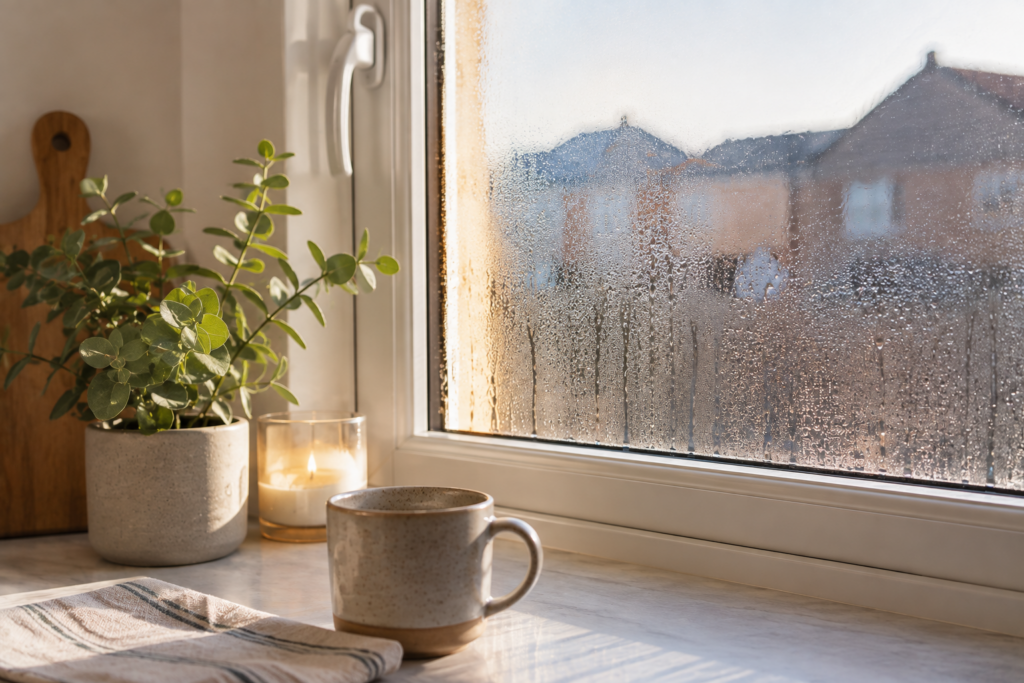
Condensation happens when warm, moisture-filled air meets a colder surface. You’ll most often notice it as droplets of water on windows, mirrors or other cooler surfaces.
Seeing a little condensation from time to time isn’t unusual, particularly on colder mornings or after cooking and showering.
If it’s happening regularly or water is being left to sit, though, it’s worth taking a few simple steps. Over time, too much moisture can encourage mould and affect decorations, furnishings and finishes.
Let your home breathe
Your home has been designed with ventilation to help fresh air move through it, so it’s important to let those systems do their job.
Keep trickle vents open, even during the colder months. They provide a small, steady flow of fresh air without you needing to leave a window wide open.
Opening windows for a short while can help too, particularly after activities that create a lot of moisture.
And try not to block or cover any ventilation points around your home with furniture, curtains or belongings.
Use your extractor fans
Extractor fans in kitchens and bathrooms are there for a reason. They remove moisture at the point where most of it is being created.
Use them whenever you’re cooking, showering or bathing and allow them to continue running afterwards if your system is designed to do so.
You may find that some fans operate automatically or continue running quietly in the background. That’s normal — they’re helping to keep the air in your home moving.
Keep a comfortable, steady temperature
It can be tempting to turn the heating off completely and then turn it up high when the house feels cold. A more consistent temperature is generally better for comfort and can also help reduce condensation.
You don’t need to keep your home overly warm. The aim is simply to avoid big swings between very cold and very warm.
During your first few months, gentle and consistent heating will also help your new home continue to dry out naturally.
A few everyday habits make a difference
You don’t need to change how you live in your home. It’s more about giving the moisture we all create a way to escape.
Pop lids on pans when you’re cooking. Keep the bathroom door closed while showering so steam doesn’t travel around the house. If you’re drying washing indoors, choose a well-ventilated room and avoid placing wet clothes directly over radiators.
And if you spot condensation on your windows, give it a quick wipe rather than leaving the water sitting on the frames and sills.
They’re small things, but together they can make quite a difference.
What about mould?
If moisture regularly settles on a cold surface and stays there, you may eventually notice small patches of mould.
Don’t ignore it. Clean the affected area promptly with a suitable product and think about what might be causing moisture to build up there. Improving airflow, using the extractor fans and keeping the room at a more consistent temperature will often help.
If mould keeps returning despite good ventilation and heating, get in touch with us so we can help you understand what might be happening.
Finding the balance
Keeping your home comfortable isn’t about having every window open or the heating running all day. It’s about finding a sensible balance between warmth and fresh air.
Let your ventilation do its job, use your extractor fans when you’re creating steam and give excess moisture somewhere to escape.
Your home — and the people living in it — will be more comfortable for it.